Here is a list of 10 Crazy Weapons that are Still Legal in the US. Follow along to learn more about these weapons. Throughout history, humans have invented a variety of deadly weapons. In the West, certain arms were developed from agricultural tools, while in the East various weapons can be traced back to different forms of martial arts. Over the years, some weapons have made their way from the battlefield into areas such as hunting, whilst others, for example, flamethrowers, have been repurposed for use in civilian spheres like agriculture.
That’s some of the histories. Today, as debate continues about gun control in the United States, it seems incredible to think that ownership of a number of deadly weapons – some ancient, some more modern – remains permitted under federal law. Read on for ten crazy weapons that are still legal in the U.S.
Related:
- Can You Believe It’s Legal: Selling Human Body Parts
- Can You Believe It’s Legal: Dueling Laws
- Can You Believe It’s Legal: Owning Exotic Pets
- Can You Believe It’s Legal? Civil Asset Forfeiture
State-by-State Legality Snapshot (General Overview for Exotic Weapons)
Categories:
L = Largely Legal (few restrictions)
R = Regulated (permits, restrictions, exceptions)
B = Broadly Banned or Highly Restricted
Note: Federal law still applies to items classified under the NFA (e.g., grenade launchers, miniguns). This chart reflects state-level restrictions on exotic / unusual weapons
State Exotic Weapons Status Notes Alabama L Few restrictions on exotic weapons. Alaska L/R Generally legal; some concealed carry restrictions. Arizona L Very permissive weapons laws. Arkansas R Some bans on concealed exotic blades. California B Bans flamethrowers (license required), sword canes, flails, nunchaku. Colorado R Some restrictions on deadly weapons and certain blades. Connecticut R Regulates unusual blades & impact weapons. Delaware R Some restrictions on blades and “dangerous instruments.” Florida L/R Crossbows legal; concealed exotic weapons restricted. Georgia L Generally permissive with weapons and blades. Hawaii B Strictest in U.S.; bans flails, nunchaku, switchblades. Idaho L Very few restrictions; swords and exotic weapons legal. Illinois R/B Restrictions on sword canes, ballistic knives; NFA items tightly regulated. Indiana L Exotic weapons widely legal with few restrictions. Iowa R Certain dangerous weapons restricted; others allowed. Kansas L Very permissive; many exotic weapons legal. Kentucky L Open carry friendly; most exotic weapons allowed. Louisiana L/R Mostly legal; concealed carry restrictions. Maine L Exotic blades and crossbows generally legal. Maryland R Some exotic weapons restricted; flails illegal. Massachusetts B Bans sword canes, nunchaku, ballistic knives, stun guns (with exceptions). Michigan R Regulates certain non-firearm weapons. Minnesota R Certain impact weapons restricted; others legal. Mississippi L Very permissive weapons laws. Missouri L Exotic weapons largely legal. Montana L Very permissive; many exotic weapons legal. Nebraska R Some blade/impact weapons regulated. Nevada L Generally permissive; flamethrowers legal. New Hampshire L Exotic weapons widely allowed. New Jersey B Very restrictive—many exotic weapons banned. New Mexico L/R Mixed restrictions on concealed weapons. New York B Bans many exotic weapons (flails, sword canes, nunchaku). North Carolina R Some bladed and blunt exotic weapons regulated. North Dakota R Certain “dangerous weapons” restricted. Ohio L/R Exotic blades recently legalized; some impact weapons restricted. Oklahoma L Very permissive with exotic weapons. Oregon L/R Some “dangerous weapons” restricted in public carry. Pennsylvania R Some exotic weapons banned; others allowed. Rhode Island R/B Some blunt weapons and blades prohibited. South Carolina L Exotic weapons largely unregulated. South Dakota L Very few restrictions on unusual weapons. Tennessee L Many exotic weapons legal after recent law changes. Texas L Almost all blades & exotic weapons legalized in recent years. Utah L/R Mostly legal; restrictions on concealed carry. Vermont L No weapon-specific restrictions beyond federal law. Virginia R Some exotic weapons illegal (e.g., ballistic knives). Washington R/B Nunchaku/impact weapons restricted; other exotic items allowed. West Virginia L Very permissive. Wisconsin R Some exotic blades restricted; others allowed. Wyoming L Extremely permissive; exotic weapons widely legal.
10. Cannon
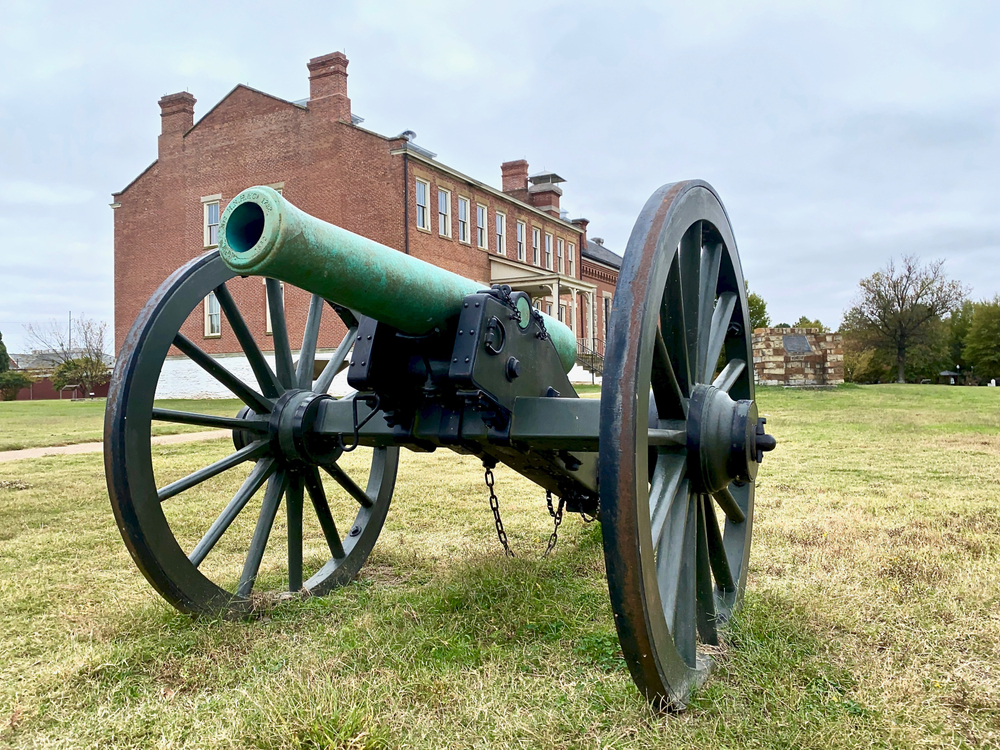
The cannon conjures images of countless historical battles on sea and land. Interestingly, the lineage of these pieces of artillery can be traced back to Chinese flame-throwing gunpowder weapons called fire lances. Since their first use in conflict – possibly in the 13th century – cannons have played important parts in many battles, but gradually they took on a more indirect role as infantry weapons improved leading up to the 20th century.
Cannon shells are classed as destructive devices in the U.S. under the 1934 National Firearms Act (NFA). They must be registered with the Bureau of Alcohol, Tobacco, Firearms and Explosives and, though legal under federal law, are prohibited from being owned by civilians in certain states. Muzzle-loading cannons themselves, however, are – remarkably – not deemed to be firearms in the U.S. and are therefore not regulated by the NFA.
9. Sap Cap
Possibly one of the most inconspicuous weapons a person is ever likely to encounter, the Sap Cap is by no means just a standard baseball cap. A hidden pocket at the back filled with a material as dense as lead makes this a dangerous weapon, with the peak doubling as a handle. Some owners have questioned the durability of the pocket that holds the weighted material at the back, but there’s no doubting the cap’s defensive – or offensive – potential. It’s readily available, too, costing $24.73 plus shipping.
8. Crossbow

Crossbows were deployed in conflicts in Europe and East Asia for centuries; in China their use has been traced as far back as the 5th century BCE. The military deployment of crossbows declined in line with increased use of gunpowder, but they are still used by special forces in Greece, Serbia, Spain and China. Jane’s Defence Weekly spokesman and veteran war correspondent Paul Beaver has remarked that crossbows “are not only a silent killer, they also have a psychological effect.” Still, military usage aside, they are now often used in hunting and for target practice. Perhaps surprisingly, there is no federal law prohibiting these weapons if they’re bought for “target shooting,” and in many states they can be employed for hunting.
7. Katana
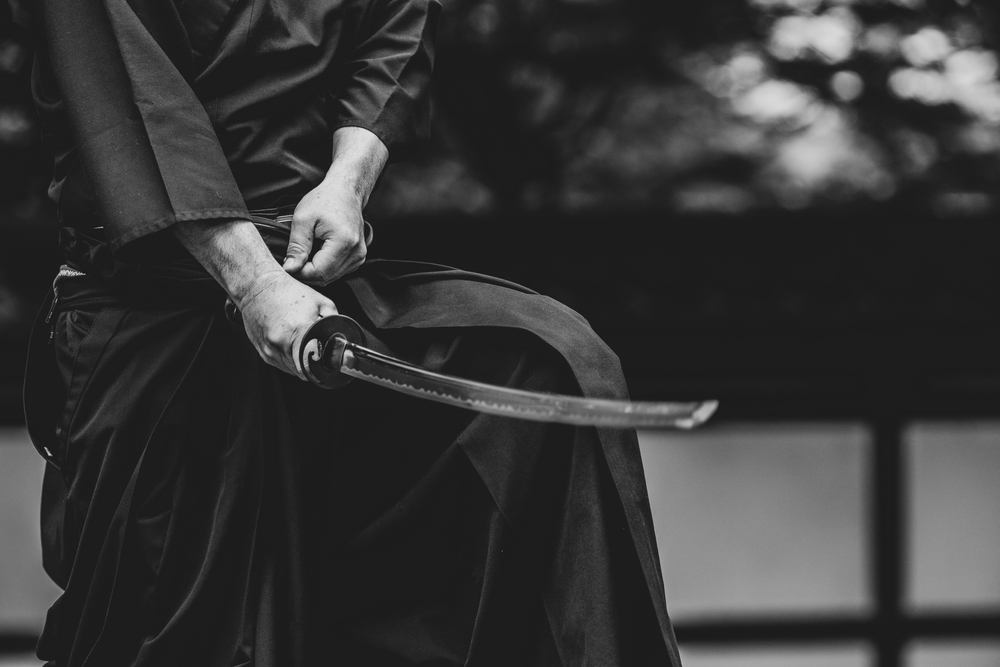
Katana swords are distinctive and deadly weapons can be traced back to 12th-century feudal Japan, where they were originally used by samurai. Their notoriety in more recent times has been given a significant boost by movie directors such as Akira Kurosawa and Quentin Tarantino, who have featured the swords prominently in some of their most popular works. Distinctions are made between different periods of Japanese sword construction, and this in turn can affect the legality of the blades. In Ireland, katana blades made after 1953 (known as shinsakuto) are banned. In 2008, blades over 20 inches long were outlawed in the United Kingdom following a number of attacks. In the U.S., however, such blades are legal to own; and in New York, for example, although it is generally forbidden to carry these weapons in public, even then there are exceptions.
6. Grenade Launcher
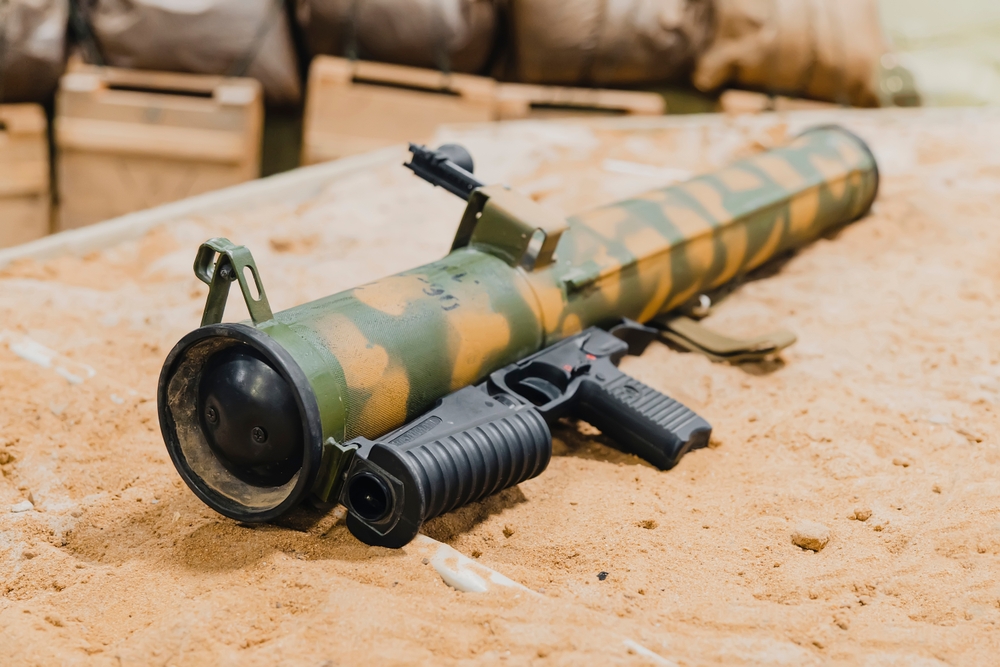
A grenade launcher is a weapon you might expect to see in open warfare, but owning one is actually permitted in the U.S. under federal law – albeit with restrictions. Classified by the National Firearms Act as a destructive device, the grenade launcher is legal in many places, as long as owners have correctly registered the weapon and passed the necessary background checks. That said, those interested in procuring and using one may not be allowed to fire anything more explosive than flares. In 2005, when Seattle police were tipped off about a rocket launcher seen in a car, they promptly called the bomb squad and then confiscated the weapon – although they later confirmed that it was unloaded and therefore legal to possess.
5. Umbrella Sword
It’s amazing what can be concealed in a seemingly ordinary umbrella. Perhaps best known as the weapon of choice for suave British spy John Steed in 1960s TV series The Avengers, umbrellas with concealed blades remain legal in a number of places. In the U.K., such concealed weapons are apparently legal to trade if they are over 100 years old – and thus antique. Meanwhile, in the U.S. the blades are only banned in New York, California and Massachusetts. Perhaps most startling of all, though, is the fact that umbrella swords with 15-inch-long blades are available online for as little as $30.
4. One-Handed Flail
The flail is a medieval weapon that’s instantly familiar. It looks devastating, but its origins actually lie in hand-held agricultural threshing tools used in various countries – in parts of Europe as well as Korea, Japan and China – during the Middle Ages. A number of variations emerged as this improvised weapon took shape, including versions with single or multiple iron balls at the end of the chain, and double-handled versions that evolved into weapons such as nunchaku. Though the days of peasant armies wielding them may be over, these archaic weapons are still legal in parts of the U.S., although not in the states of New York, New Jersey, California, Massachusetts or Pennsylvania.
3. Minigun
The name Minigun actually originally related to a particular gun model made by General Electric, but it has gone on to become a more generalized term to describe all rifle-caliber Gatling-type guns that are externally powered, and indeed various other similarly configured guns. These ferocious cannons feature multiple, revolving barrels and high rates of fire – in the case of the M134 Minigun, up to 6,000 rounds a minute. Astonishingly, such large, deadly weapons are legal to own in the U.S. owing to a law passed in 1986 that permitted ownership of any fully automatic weapon built prior to that year. That said, the process of obtaining one may prove difficult and expensive. Relatively few miniguns make it onto market, and even then one is likely to set prospective buyers back roughly $400,000. Then there’s the fact that firing the weapon costs approximately $60 a second thanks to the price of the ammunition.
2. Chain Whip
Predominantly associated with traditional Chinese martial arts, the chain whip generally comprises a handle with a series of flexible metal links leading to a spiked slashing point at the other end. The weapon is capable of moving faster than the human eye can perceive, so users sometimes attach cloth flags to the end of the chain to create extra clues as to its location. This, combined with the extra stability the flags provide, helps prevent people from injuring themselves. Designs vary in length, and this intimidating weapon is also highly concealable owing to its flexibility and short handle. Nevertheless, it remains legal to own in most parts of the U.S.
1. Flamethrower
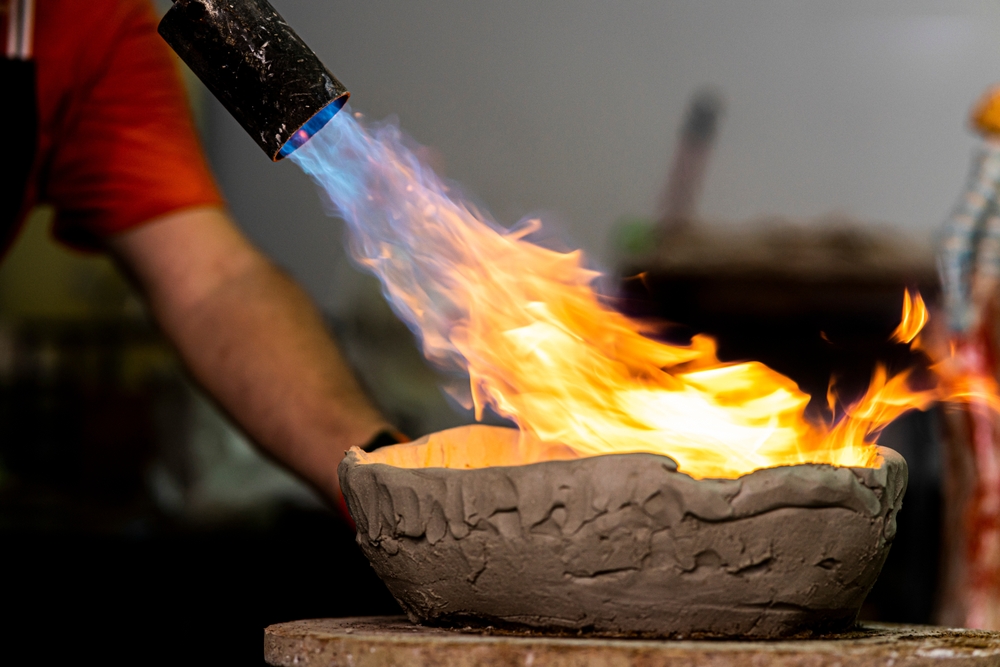
As the name suggests, a flamethrower is an incendiary weapon that shoots out a torrent of fire. After their use in World War I, modern flamethrowers increased in usage and featured in other major 20th-century conflicts. Still, the usage of these weapons has been controversial in view of the dreadful way in which victims die, and the U.S. military ceased using them in the late 1970s.
While military flamethrowers use combustible liquid, commercial flamethrowers like those utilized in agriculture often employ high-pressure gas. When it comes to the civilian arena, America has a different approach to other countries, and privately owning a flamethrower is not forbidden under federal law. Still, these devices are controlled in certain states, including California, where possession of one without a license could result in a one-year prison term or a fine of up to $10,000. In contrast, possession of one of these weapons in the U.K. can lead to a jail sentence as long as ten years.
Why Are These Weapons Still Legal in the U.S.?
Many people are shocked to learn that weapons such as flamethrowers, grenade launchers, crossbows, and even miniguns can still be legally owned in parts of the United States. The reasons for this are tied to a combination of constitutional interpretation, gaps in federal law, and the way certain weapons are classified. Here’s why these surprising items remain legal today:
Second Amendment Interpretations
The U.S. Constitution protects the right to “keep and bear arms,” and historically, courts have interpreted this right broadly. While the Supreme Court has allowed certain regulations, many types of weapons remain legal because:
- They are not classified as firearms
- They do not fall under categories of weapons specifically restricted by Congress
- Owners can argue they are used for sport, collection, or hobby purposes
Because of this, many unusual or antique-style weapons fall outside typical gun-control debates.
National Firearms Act (NFA) Loopholes & Historical Protections
The National Firearms Act of 1934 regulates machine guns, suppressors, short-barreled rifles, and destructive devices. However, many weapons on this list remain legal because:
- They were not included when the NFA was written
- They fall into gray areas the law never anticipated
- Some items (like pre-1986 automatic weapons) were “grandfathered” in and remain lawful to own
This creates legal pathways for civilians to purchase weapons like miniguns—provided they meet NFA registration and background requirements.
Many Items Don’t Count as “Firearms” Under Federal Law
A surprising number of dangerous weapons are legal simply because they aren’t categorized as firearms.
Examples include:
- Flamethrowers (they emit fire, not bullets)
- Crossbows
- Katana swords and flails
- Black-powder muzzle-loading cannons
If a weapon does not use an explosive charge to fire a projectile, federal firearms laws usually do not apply—even if the weapon is extremely dangerous.
Antique, Collectible, and Novelty Weapons Bypass Modern Rules
Many historical or replica weapons fall into special categories that receive lighter regulation, such as:
- Antiques made before 1898
- Black-powder devices
- Reenactment equipment
- Novelty weapons intended for collectors
Because they are not treated as modern firearms, they avoid federal licensing and classification rules.
This is why:
- Antique cannons
- Umbrella swords
- Medieval flails and chain whips
remain mostly unregulated at the federal level.
Bottom Line
Many unusual or dangerous weapons stay legal in the U.S. because:
- They fall outside the federal definition of a firearm
- They are protected or grandfathered under the NFA
- They are classified as antiques, tools, or novelty items
- The Second Amendment restricts broad bans
Although some states impose stricter rules, federal law still leaves significant room for private ownership of these surprising—and sometimes shocking—devices.
FAQs: Crazy Weapons Still Legal in the U.S.
Are flamethrowers really legal in the U.S.?
Yes — at the federal level, flamethrowers are legal because they are not classified as firearms or destructive devices under the NFA. However, states like California and Maryland impose restrictions or require permits.
Can civilians own grenade launchers?
Surprisingly, yes — civilians may legally own a grenade launcher as long as it is registered as a “destructive device” with the ATF under the National Firearms Act.
However, actual explosive grenades are heavily restricted, meaning many owners can only fire flares or smoke rounds.
What weapons are banned under the NFA?
The National Firearms Act restricts or bans:
- Fully automatic weapons made after 1986
- Short-barreled rifles and shotguns
- Explosive weapons like grenades, bombs, and missiles
- “Destructive devices,” unless specially registered
Some exotic weapons fall outside these definitions, which is why they remain legal.
Do you need a permit to own a cannon?
You do not need a federal permit to own a muzzle-loading cannon, because it is legally considered an antique, not a firearm.
However, modern cannons or explosive shells must be registered as destructive devices.
Why are medieval weapons still legal?
Most medieval weapons — such as katanas, crossbows, flails, and chain whips — are legal because they are not classified as firearms and fall into categories of collectibles, antiques, or tools.
State laws may vary, but federal regulations rarely address these items.
Is owning a minigun actually possible?
Yes — but only if the minigun was manufactured before 1986, registered under the NFA, and the buyer passes extensive background checks.
The cost is extreme: a pre-1986 minigun typically sells for $250,000–$400,000, and firing it can cost $60 per second in ammunition.
Which states have the strictest weapons laws?
States with the broadest bans on exotic or unusual weapons include:
- California
- New Jersey
- New York
- Massachusetts
- Hawaii
These states commonly prohibit flails, nunchaku, sword canes, ballistic knives, and high-powered incendiary devices.
Related:
Top 12 Paralegal Degree Specializations
Top 25 Best Value Online Paralegal Certificates
Top Online Bachelor’s in Paralegal Degree Programs
Top 25 Best Online Master’s in Legal Studies
